Same Sky, Different Ground

The forces

Four things made all of this

Ecosystems are the what. These are the why. Rock, soil, water and fire are the four forces that build every kind of country on the coast — and reading them is the whole trick. The rock lays down the rules; the soil translates them into something a plant can use; and then water and fire spend the rest of time haggling over the details, while everything alive simply lives out the result.

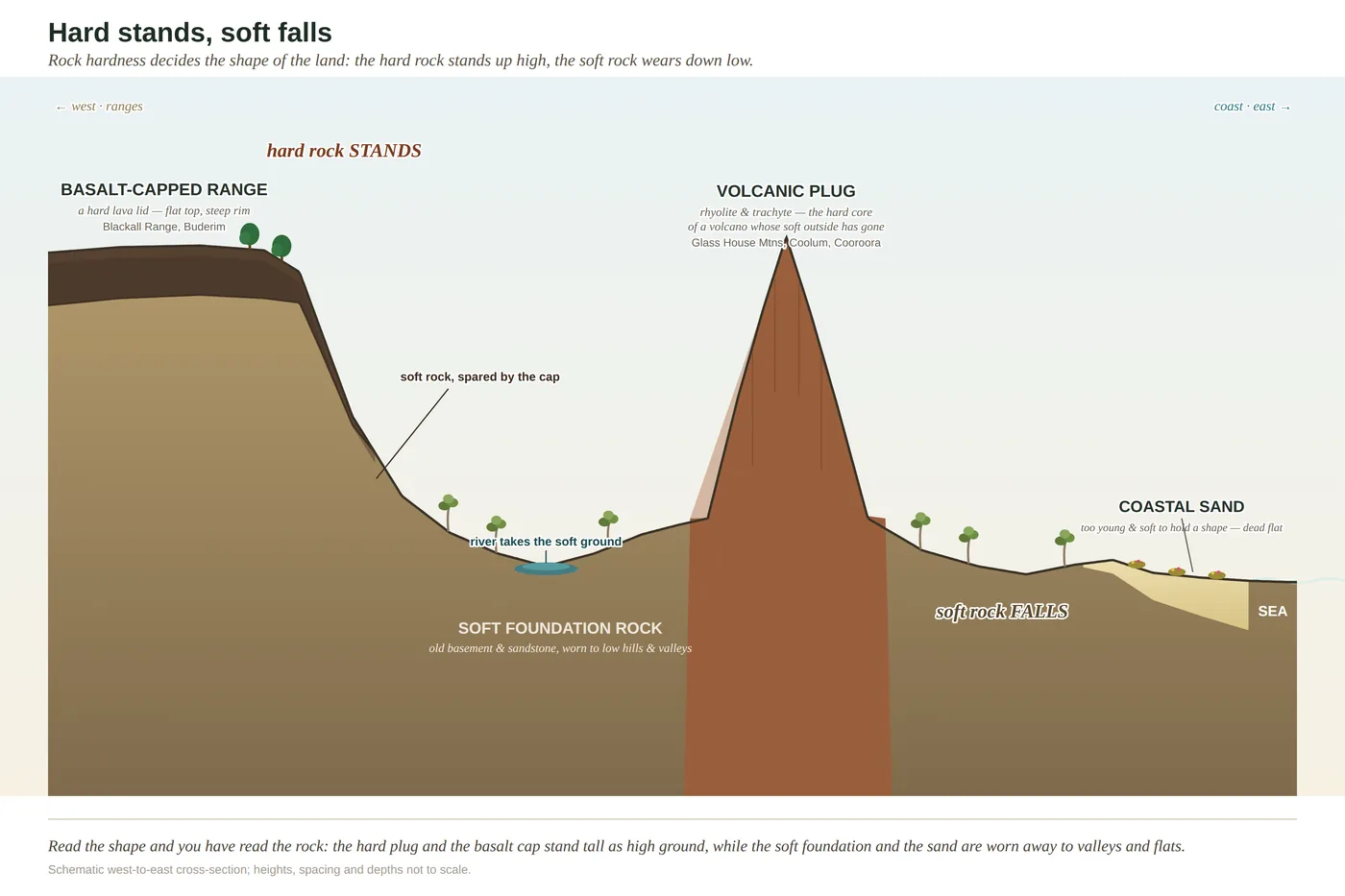
Landform cross-section: the hard volcanic plug and basalt cap stand high, the soft foundation rock and sand wear low

Rock

Everything starts with what's underneath.

The stone at the bottom decides what grows at the top. Dark basalt on the range breaks down into deep red, fertile soil — rainforest ground. Poor stone, and old bleached sand, give you hungry country and heath. The steep blue peaks are the hardest rock of all: the burnt-out cores of ancient volcanoes, left standing while everything softer around them wore away. Learn to see the rock and you can predict the soil before you've even looked at it.
The giant podzol and dune chronosequence

Soil

The thin skin that translates rock into life.

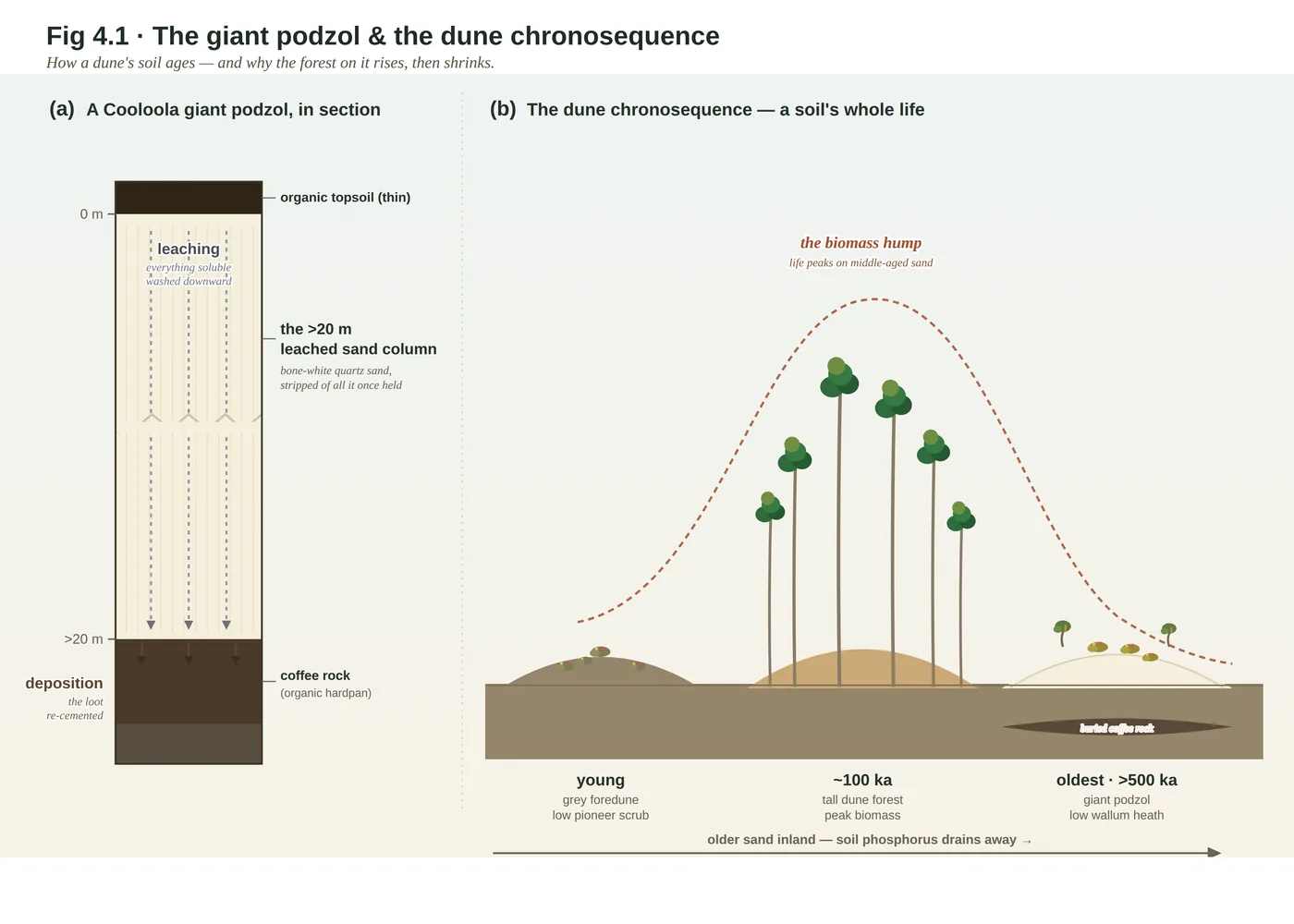
Soil is where rock becomes something living things can use — and its two honest signals are colour and depth. Deep red means basalt and richness; bone-white means sand leached almost to pure poverty. At Cooloola you can read a soil's entire life, from young and fertile to ancient and starved, just by walking inland across dunes that get older as you go. Soil is the single best predictor of what will grow: give a place more of it and the forest grows tall; starve it and the forest opens out, or shrinks to heath.

Dune lakes: window and perched

Water

Less how much than how salt, how acid, how long.

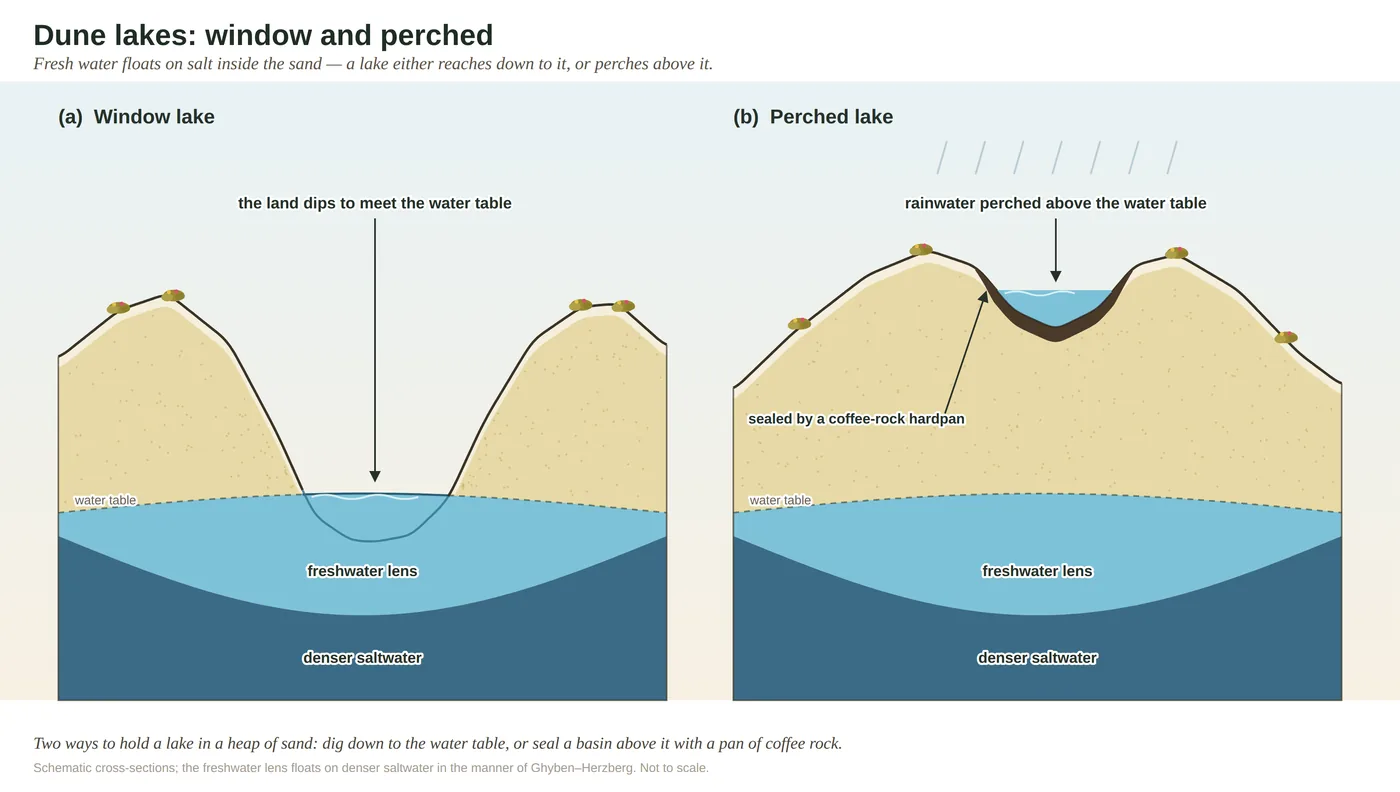
Water sorts this coast as sharply as soil does, and it works by more than rainfall. In the estuary, the master variable is how often the salt reaches. In the swamps, it's how many days a year the ground stays underwater. In the wallum, it's the tea-dark, acidic blackwater that seeps out of the sand — and a hidden aquifer, recharged by summer storms, holding the whole sand country together from below. Most of what lives on this coast is really just following the water.

How fire draws the forest boundary

Fire

The force that draws the lines between the forests.

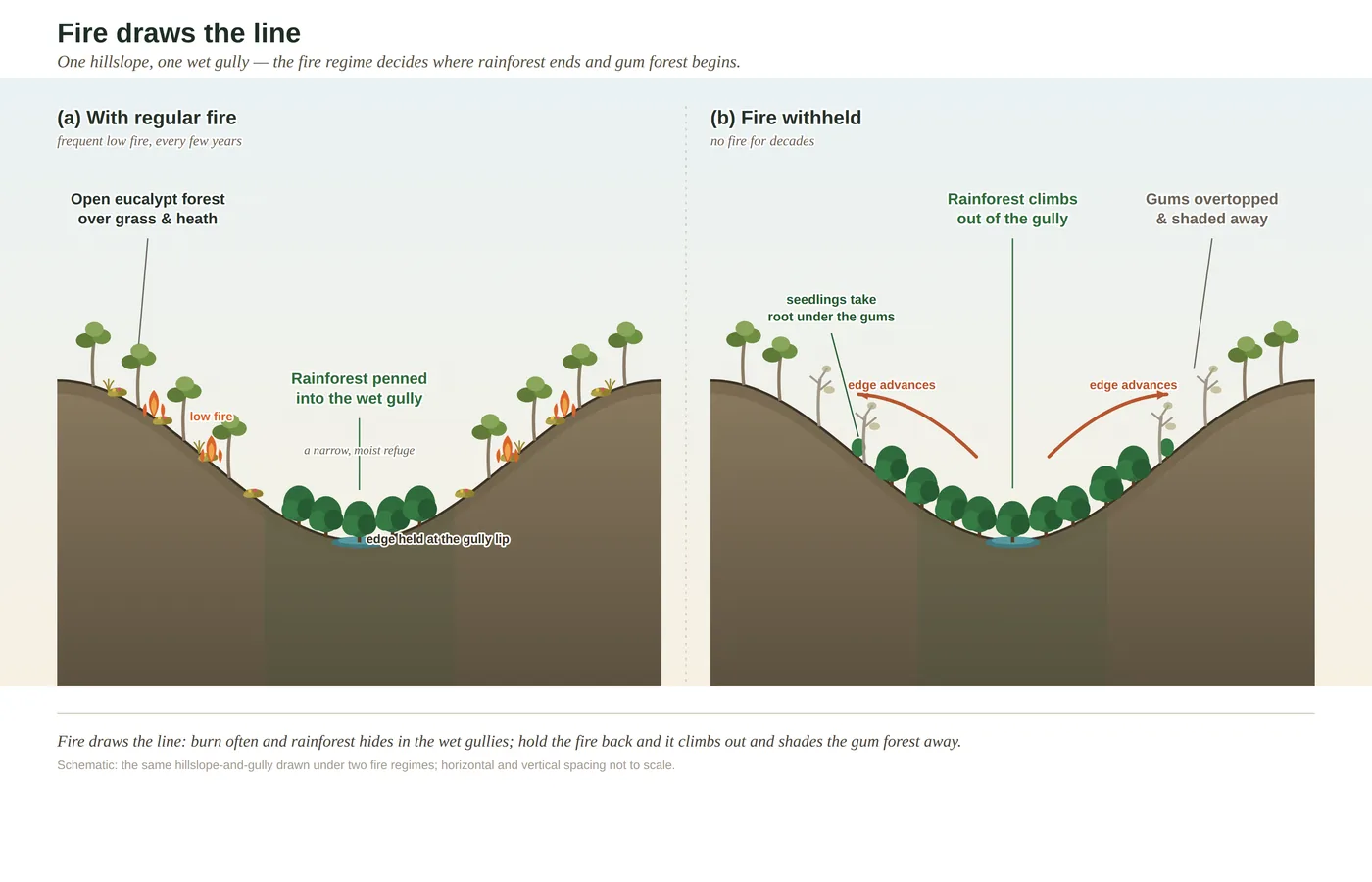
Fire decides where one kind of country stops and the next begins. Eucalypts are built for it: armoured to come through a burn, quick to seed once it has passed, so at home in fire that they all but invite it, and that is how they hold their ground. Rainforest takes the other route, a closed, damp, shaded interior that fire can't get into, without which it couldn't exist here at all. Where the fire stops is where gum forest gives way to rainforest. For tens of thousands of years, people have used that same tool to shape this country — a history we can tell here only as far as the published record reaches.

Forces make the country. Read the country.

See how these four forces stack up into every ecosystem on the coast — from the reef to the range.

Explore the ecosystems